
How to properly install a central air conditioning fan coil unit?
Fan coil units are the most common terminal forms in water-based central air conditioning systems. They consist of small fans, motors, and coils, and are widely used in both production and daily life. What should be noted when installing fan coil units? Here are a few key points summarized by Tianxiang Electromechanical. Let's take a look!
How to properly install a central air conditioning fan coil unit? Come in and take a look now!
Before installing the fan coil unit, inspect the motor insulation, fan performance, and impeller rotation direction to ensure they meet the design requirements. Also, check all connection points for looseness to prevent additional noise. Then, verify the model, type, and (i.e., left or right configuration) against the HVAC engineering design specifications. Proceed with installation only after confirming everything is correct.
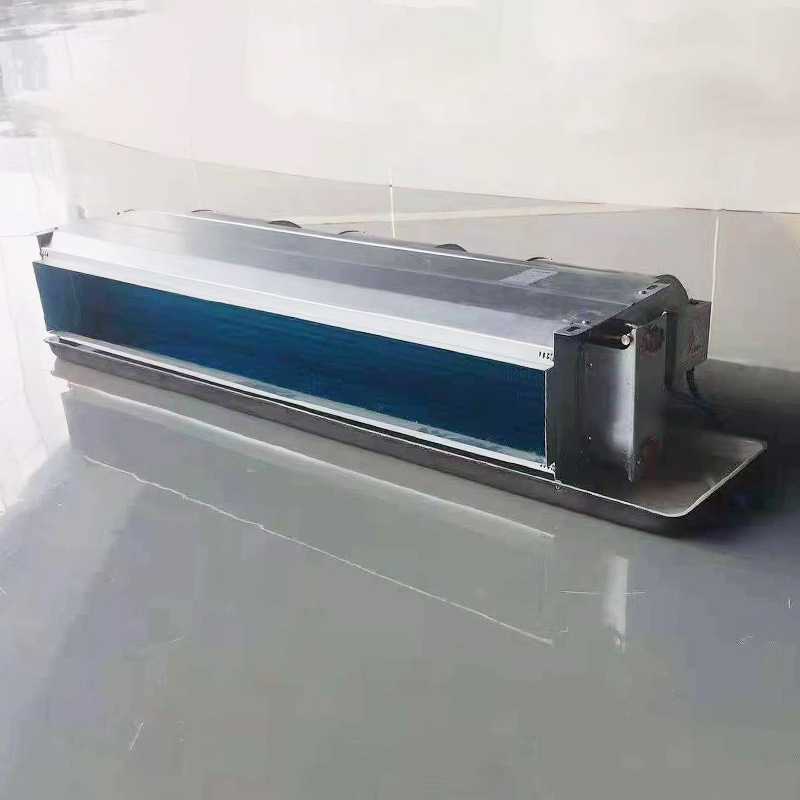
The suspension rod of the horizontal fan coil unit must be secure and reliable. The elevation should be determined based on the heights of the chilled (heated) water pipes, return water pipes, and condensate pipes. In particular, the elevation of the condensate pipe must be lower than that of the fan coil unit's condensate pan to facilitate the drainage of condensate in the ventilation system.
For horizontally concealed fan coil units, close coordination with interior decoration work is essential during installation to prevent damage to the ceiling or walls during construction. The reserved locations and dimensions for return air openings should account for ease of maintenance of the fan coil units and convenient access to valve operations in the central air conditioning system.
The connection between the fan coil unit and the chilled or hot water pipes should be installed in the form of top supply and bottom return to enhance the heat exchange performance of air treatment. A Y-type water filter can be installed on the chilled or hot water pipes connected to the fan coil unit to remove mechanical impurities and sludge from the ventilation and air conditioning engineering pipelines, preventing blockage of the fan coil unit.
The supply and return water pipes connected to the fan coil unit must be flexible. This is because the fan coil unit generates a certain degree of vibration during operation. Using rigid connections not only produces significant noise but also leads to leakage at the joints over time, potentially damaging the fan coil unit in severe cases. There are two types of flexible connections: one is a specially designed rubber flexible joint, with threaded unions at both ends—one end connected to the pipe and the other to the fan coil unit; the other is annealed pure copper tubing, where both ends are flared using a pipe expander and secured with nuts.
For a perfect air experience, proper installation of fan coil units is also crucial~
How to properly install a cent
 Points to Consider before gett
 TYPES OF AIR-CONDITIONING UNIT
 What to look for when choosing